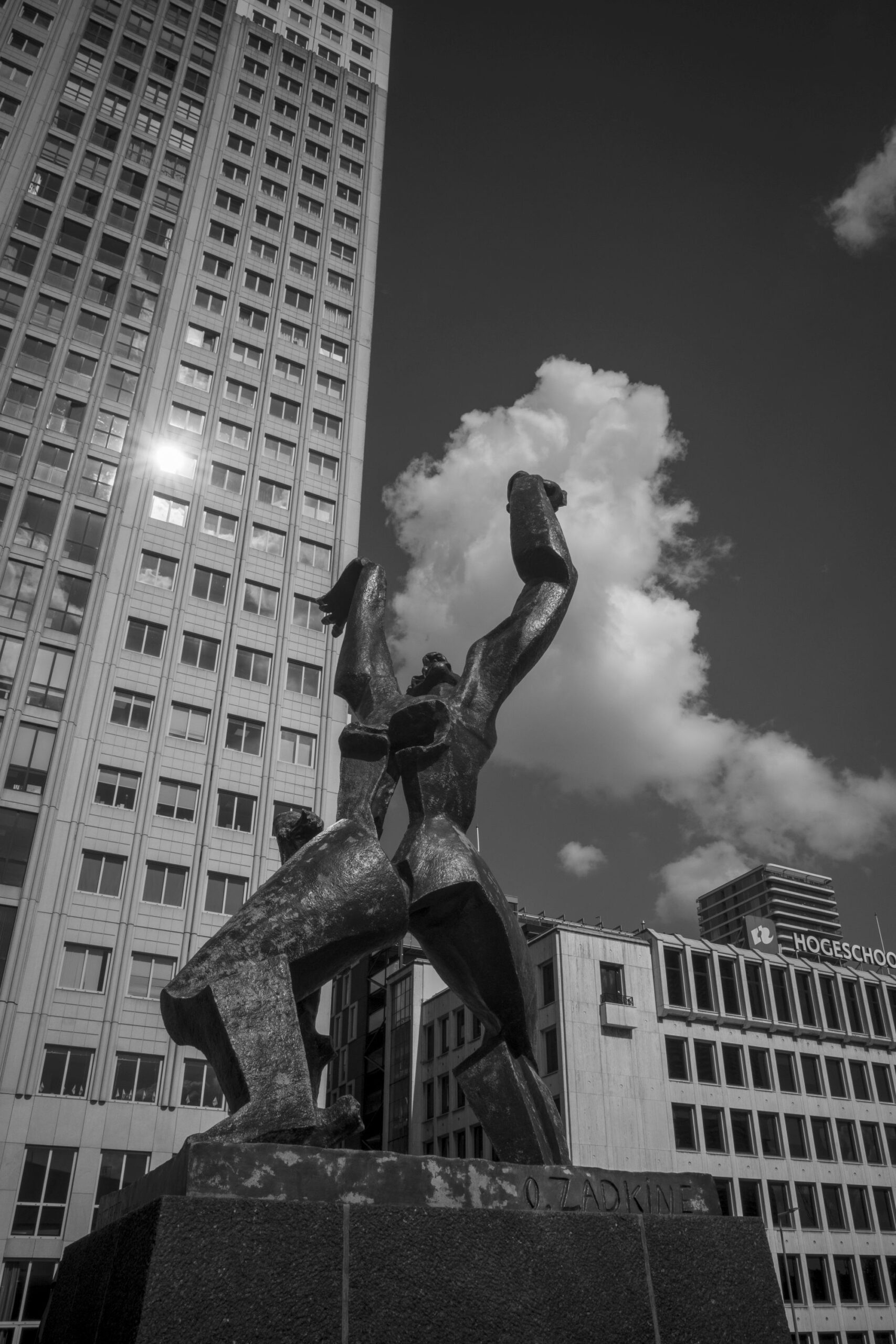
At Plein 1940, beside the Leuvehaven, Rotterdam confronts its own history head-on. Ossip Zadkine’s The Destroyed City is not just a monument—it’s a powerful street-level encounter with memory, space, and emotion, and a compelling location for thoughtful urban photography.
A City Marked Forever
On 14 May 1940, Rotterdam’s historic center was destroyed in minutes during the German bombardment. The vast open spaces, modern high-rises, and memorials you see today are lasting consequences of that event. Zadkine’s sculpture stands here as a physical reminder of a city struck at its heart—an anchor point where history and the contemporary streetscape collide.

The Sculpture and Its Meaning
Unveiled in 1953, The Destroyed City depicts a human figure with arms raised to the sky and a gaping hole where the heart should be. That void symbolizes Rotterdam’s destroyed city center. The expressive, almost anguished posture captures collective grief while remaining universally human—an image that resonates strongly when framed against open sky and water.

From Vision to Monument
Zadkine conceived the work after witnessing the devastation of Rotterdam from a train. Though not originally made for the city, the sculpture found its definitive meaning here. Gifted anonymously by De Bijenkorf and later revealed as such, it became one of Europe’s most recognized war memorials, inseparable from Rotterdam’s identity.
Plein 1940 as Urban Stage
Originally surrounded by emptiness, the monument is now enclosed by modern architecture. This contrast—raw emotion against symbols of reconstruction—adds visual tension. The nearby ground lights marking the fire boundary (brandgrens) extend the story into the pavement, offering photographers subtle details that connect monument, city, and memory.

Why This Spot Matters Today
The Destroyed City remains a focal point for remembrance ceremonies, but also for daily urban life. Cyclists pass, office workers cross the square, and tourists pause. That coexistence of movement and stillness makes Plein 1940 a uniquely layered street photography location in Rotterdam.

Tracing the Fire Boundary Through the City
From Plein 1940, the story of The Destroyed City continues beyond the sculpture itself. Embedded ground lights mark the brandgrens—the 12-kilometer boundary of the area destroyed by the 1940 bombardment. Following these subtle markers through streets and squares reveals how deeply the event shaped Rotterdam’s layout. For photographers, the brandgrens offers a quiet narrative thread: small points of light and stone that contrast with everyday street scenes, inviting images where past and present intersect in a single frame.
Photograph this monument with context. Step back and include passing pedestrians or surrounding high-rises to contrast human scale with historical weight. Overcast light softens shadows and suits the mood, while early morning or dusk emphasizes silhouettes against the sky. Use the hole in the figure’s torso as a framing device—aligning it with buildings, clouds, or moving figures to visually echo the city’s missing heart.