Rotterdam Centraal Station is where the city’s energy becomes visible. Step into the Grand Hall and you’ll feel it immediately: a fast-paced rhythm of travelers, warm materials against cool metal, and shifting light that turns ordinary movement into something cinematic. As a gateway to Rotterdam—and a landmark in its own right—the station blends architecture, culture, and daily life in a way that perfectly matches a vibrant city.
Rotterdam Centraal Architecture: Team CS and a Future-Facing Design
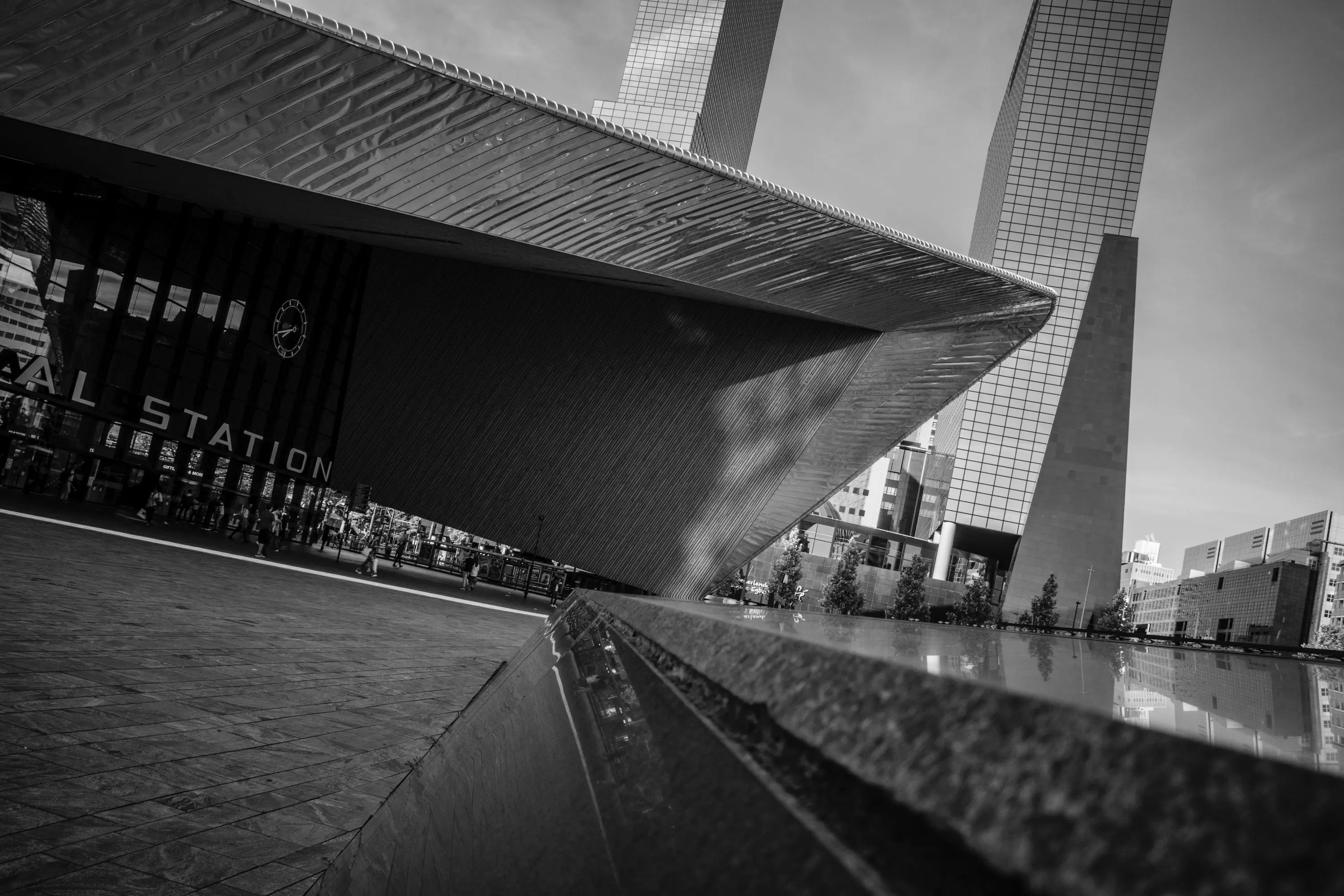
The Rotterdam Centraal architecture is the result of Team CS, a collaboration between Benthem Crouwel Architects, Meyer en Van Schooten Architecten, and landscape designers West 8. Their design wasn’t only about efficiency; it was about creating a new front door for Rotterdam. Clean lines, strong angles, and open sightlines give the station a confident presence—modern, functional, and unmistakably Rotterdam. The result is a building that feels international while staying connected to the city’s forward-thinking character.
.jpg)
High-Speed Connections: Rotterdam as a European Gateway
With high-speed train connections toward Belgium, France, and the United Kingdom, Rotterdam Centraal functions as a major European arrival point. The station handles 110,000+ visitors a day, and that constant flow gives the space a lively, urban pulse. You’ll see business travelers weaving through families with suitcases, commuters moving with purpose, and visitors pausing to take in the scale of the hall. It’s a place where Rotterdam’s tempo—fast, diverse, and always in motion—plays out in real time.

Station Kapsalon: Rotterdam Nicknames and City Humor
One of the most Rotterdam things about the station is its nickname: “Station Kapsalon.” Locals love giving buildings, bridges, and artworks their own unofficial names, and the station’s shiny roof reminded people of the aluminum trays used for the famous Rotterdam dish: a hearty mix of fries, shawarma, salad, sauces, and melted cheese. The joke stuck—and it says a lot about the city. Rotterdam design can be bold and futuristic, but the culture stays grounded, playful, and proudly local.
.jpg)
Grand Hall Interior: Warm Wood, Harbor Imagery, and a Giant Screen
Inside the Rotterdam Centraal Grand Hall, the atmosphere shifts from sleek to welcoming. Wood cladding adds warmth and calm to a space that could otherwise feel purely industrial. Then there’s a standout detail: a 40-meter-wide LCD screen showing footage of the Rotterdam harbor. It’s an intentional reminder that the port is part of the city’s identity—even here, in the heart of the station. The combination of warm textures and moving imagery creates a striking interior that feels modern, human, and unmistakably Rotterdam.

South Hall Skylights: Natural Light and the “Rembrandt Effect”
The Rotterdam Centraal South Hall is known for its dramatic lighting design. Seven skylights and mirrored roof elements guide daylight into the interior, creating shifting beams of light as the sun moves. This effect—sometimes described as a “Rembrandt effect”—adds depth and atmosphere throughout the day. Mornings and evenings often bring the most character, when light becomes directional and shadows sharpen. Even on overcast days, the hall maintains a bright, airy feeling thanks to the station’s openness and carefully planned illumination.

Rotterdam Central District: Urban Renewal Around the Station
Rotterdam Centraal doesn’t stand alone—it anchors the Rotterdam Central District, a zone shaped by modern development and a strong 24-hour city culture. The station connects different sides of Rotterdam and marks the start of a broader urban axis where travel, work, and city life meet. Importantly, it also preserves pieces of history: the original clock and typography were kept, and the sculpture nicknamed the “Speculaasjes” remains as a nod to the earlier 1957 station by Sybold van Ravesteyn. That blend—heritage details within a contemporary setting—captures Rotterdam’s identity perfectly: always renewing, never forgetting.

If you’re exploring Rotterdam for the first time, Rotterdam Centraal is more than a stop—it’s an introduction. It shows the city’s ambition, its humor, its relationship with the harbor, and its love of bold design—all in one place, buzzing with movement from morning to night.
In the Field: shoot the façade slightly off-center to emphasize the angles; a wider lens helps capture the roofline. Arrive early for clean geometry, then return at rush hour for layered moments and leading lines. From the Grand Hall entrance to the warm interior glow, Rotterdam Centraal rewards photographers who love structure, light, and people in motion.