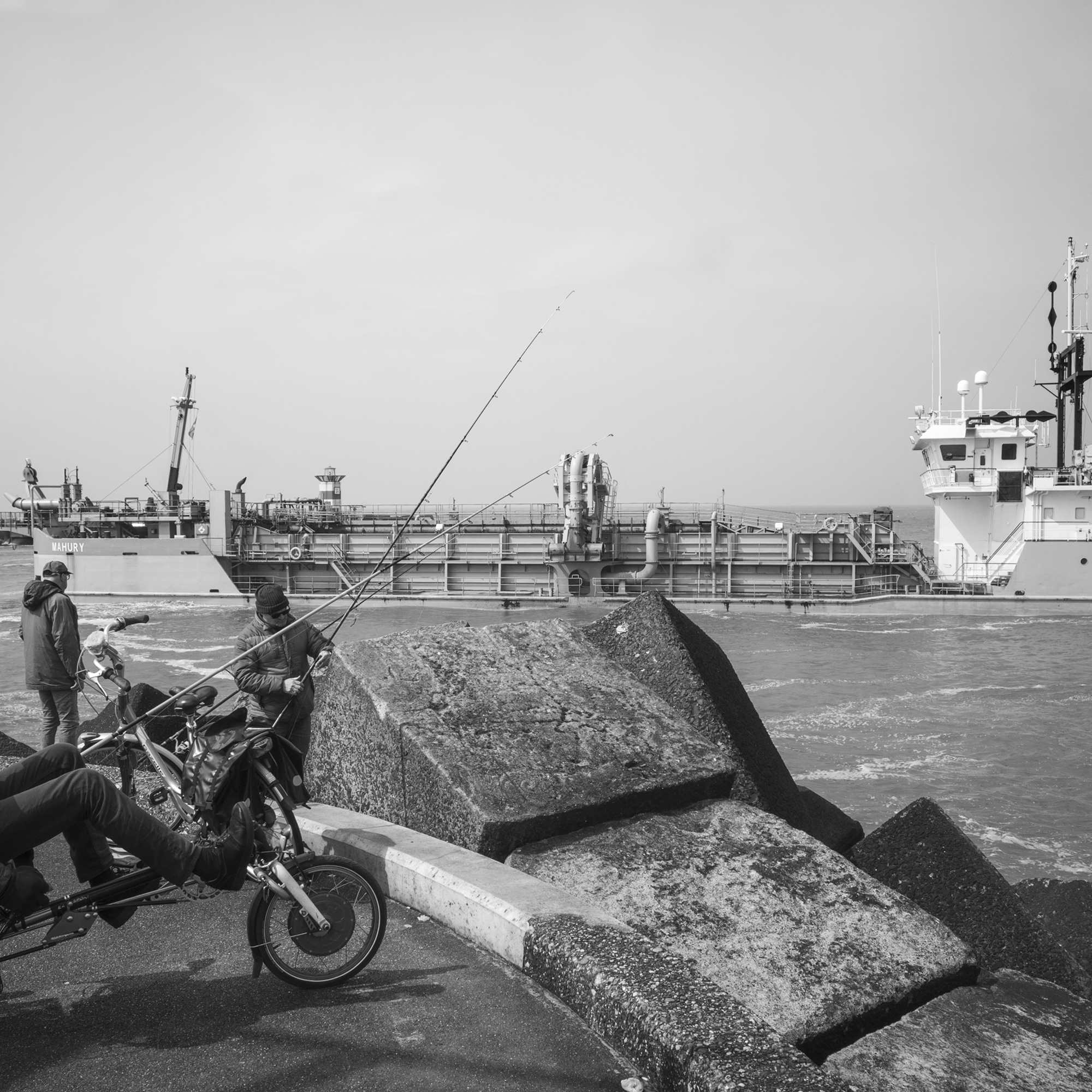
Mahury Scheveningen — at the northern harbor head of Scheveningen, everyday coastal life unfolds against a backdrop of raw maritime infrastructure. Here, industrial vessels, shifting tides, and quiet human routines coexist in a landscape that feels both functional and poetic. This featured photograph captures that intersection—where work at sea passes within arm’s reach of leisure on land—making the location a natural subject for street and urban photography in West Holland.
,_Scheveningen_-_Studie_voor_Panorama_van_Scheveningen_-_hwm0227_-_The_Mesdag_Collection.jpg)
Mahury Scheveningen — The Northern Harbor Head as an Urban Stage
Where infrastructure meets everyday ritual
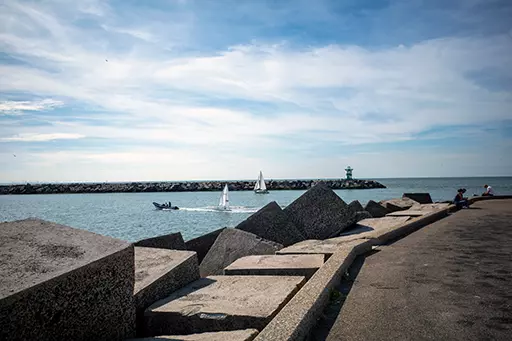
On the northern harbor head of Scheveningen, the coastal edge becomes a layered stage for street and urban photography. This is a place where massive maritime engineering meets intimate human gestures. The basalt blocks form a geometric foreground, the water delivers constant motion, and the horizon is punctuated by working vessels rather than postcards. The featured photograph captures this balance precisely: a working dredger passing close to shore while recreational fishers claim their space on the pier. The scene feels unscripted and grounded—an honest slice of coastal life where scale and proximity do the heavy lifting.
What makes this environment compelling is its visual honesty. Nothing is dressed for the camera. Rust, spray, concrete, and wind collaborate to create a palette that rewards patience. Photographers who work here quickly learn that the setting offers strong compositions even before a subject enters the frame.
Accessibility Without Compromise
A location built for observation
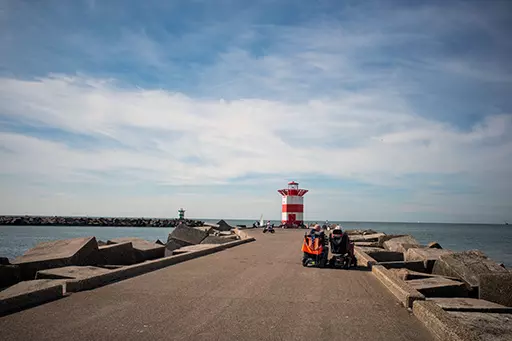
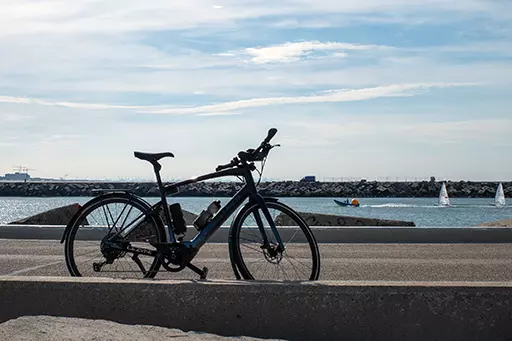
One of the strongest assets of the northern harbor head is how easily it can be reached. Accessible on foot or by bicycle, it invites repeat visits and long observation sessions—an advantage for photographers who prefer to work slowly. You can arrive lightly equipped and still find endless variation within a short walking radius.
From a photographic perspective, accessibility translates into flexibility. You can return at different tides, weather conditions, and light angles without logistical friction. This supports a documentary mindset rather than a one-off capture.
Why accessibility matters for urban photographers:
- Spontaneous encounters without planning overhead
- Ability to revisit and refine compositions
- Comfortable distance from tourist-heavy zones
This ease of access lowers the threshold between seeing and photographing, which is often where the strongest street work begins.
Industrial Motion as Visual Counterpoint
The presence of the dredger
The dredger Mahury dominates the mid-ground of the image, moving laterally across the frame with quiet authority. Operated by De Boer – Dutch Dredging, the vessel represents ongoing maintenance rather than spectacle. Its purpose is functional, yet visually it becomes a powerful graphic element: long horizontal lines, rigid forms, and subtle tonal shifts against sea and sky.
For photographers, such ships offer a rare combination of predictable movement and imposing scale. They move slowly enough to compose deliberately, yet close enough to shore to interact visually with people on land. The contrast between engineered precision and human improvisation creates a narrative tension that reads clearly in still images.
Industrial work, when observed closely, reveals a quiet choreography.
This choreography becomes most visible when framed against the informal rhythms of daily recreation.
Recreational Fishing as Human Anchor
Stillness against movement
The fishers on the harbor head introduce stillness, posture, and intention. Their lines cut diagonally through the air, echoing the ship’s linear geometry while remaining fragile and temporary. This contrast anchors the image emotionally. The figures are anonymous, yet familiar—people engaging with the sea in a way that predates the harbor itself.
From a street photography standpoint, these moments are invaluable. They are neither staged nor reactive. The subjects are absorbed in their activity, allowing the photographer to work invisibly. The resulting images feel observational rather than extractive.
Key visual dynamics at play:
- Diagonal fishing rods versus horizontal hull lines
- Human-scale gestures against industrial mass
- Pauses of calm within an active maritime setting
Such dynamics reward photographers who pay attention to balance rather than drama.
Light, Texture, and Coastal Atmosphere
A monochrome-friendly environment
The northern harbor head lends itself naturally to black-and-white interpretation. Hard surfaces, overcast skies, and reflective water compress the tonal range into something graphic and controlled. Even in flat light, textures remain legible: wet stone, painted steel, rippled water.
For urban photographers, this environment encourages experimentation with minimalism. Shadows are soft, highlights restrained, and contrast emerges from structure rather than sunlight. This makes the location especially suitable for photographers who prefer form over color.
The absence of visual clutter allows compositions to breathe. Frames can be dense without becoming chaotic, which is a rare quality in coastal urban spaces.
A Living Edge of West Holland
Why this place keeps giving
What ultimately defines the northern harbor head is continuity. The same interactions repeat, yet never identically. Ships come and go. People arrive, wait, leave. Water levels shift, wind redraws the surface of the sea. For a photography platform focused on street and urban work in West Holland, this location exemplifies how place can act as a collaborator.
The featured photograph succeeds because it trusts the environment. It does not chase spectacle; it observes alignment. In doing so, it reflects the strength of this coastal edge as a photographic setting—raw, accessible, and visually generous.
This is a place for photographers who value:
- Process over instant results
- Context over isolation
- Environment as narrative
At the northern harbor head of Scheveningen, the city meets the sea without mediation—and that is exactly where compelling urban photography begins.
For me, this place works best when nothing is forced. I spend time watching how the harbor breathes—how ships pass, how people settle into their routines, how the light flattens or reveals texture. When those elements briefly align, I lift the camera. The image is not about a single subject, but about coexistence: work and leisure, mass and fragility, movement and pause. That quiet balance is what keeps drawing me back to the northern harbor head of Scheveningen.
2 Replies to “Mahury at the Harbor Head of Scheveningen | Dredger and Fishermen in Urban Coastal Photography”
Comments are closed.